
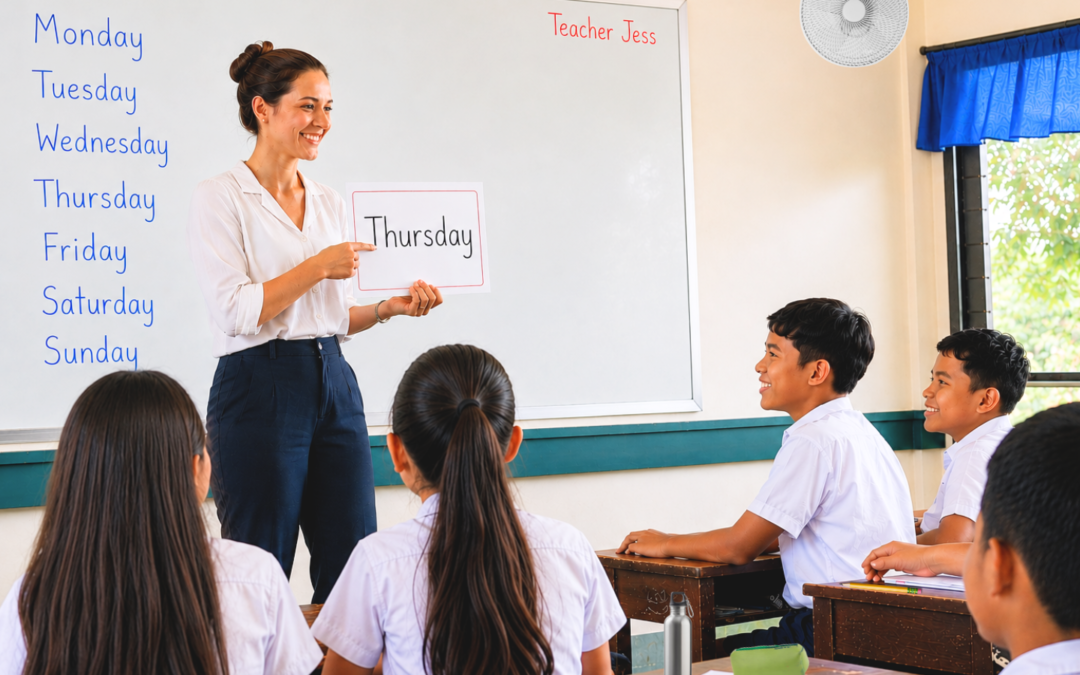
For many foreigners, English teaching jobs in Cambodia represent more than a way to earn some money — they’re an opportunity to immerse yourself in Khmer culture, build your teaching skills, make lifelong friends and genuinely help others who might not be as fortunate by virtue of where they were born. Compared with other ESL teaching destinations in Southeast Asia, Cambodia remains relatively accessible to newcomers, including people without a university degree. True, teaching in Cambodia is not always what people expect. Before packing your bags and heading off to Phnom Penh, Siem Reap, Battambang or elsewhere in Cambodia to teach English, it’s important to grasp how the market works, what schools are looking for in a foreign ESL teacher, where the jobs are located, and whether the lifestyle will suit you.
Why Cambodia Appeals to Foreign English Teachers
While no two people are the same, foreign English teachers often weigh up similar factors when choosing a teaching destination, including demand for teachers, cost of living, visa requirements, lifestyle, and how they will be received by the local community. From my observations on the ground, Cambodia rates well in each of these areas — and several others. Arguably one of the last frontiers for teaching ESL worldwide, Cambodia is especially attractive to newcomers because of its relaxed expat lifestyle, accessible entry requirements, genuine opportunities for paid teaching work, and the fact that a university degree is not mandatory.
At the centre of Cambodia’s appeal to foreign English teachers is a simple but powerful combination: the pathway into paid teaching work is realistic, and the lifestyle benefits can be substantial. For those who prepare properly — with a clear background check, government-regulated TESOL, TEFL or CELTA certification, cultural awareness, realistic expectations, and respect for the fact they are visitors — teaching ESL in Cambodia can be both viable and rewarding.
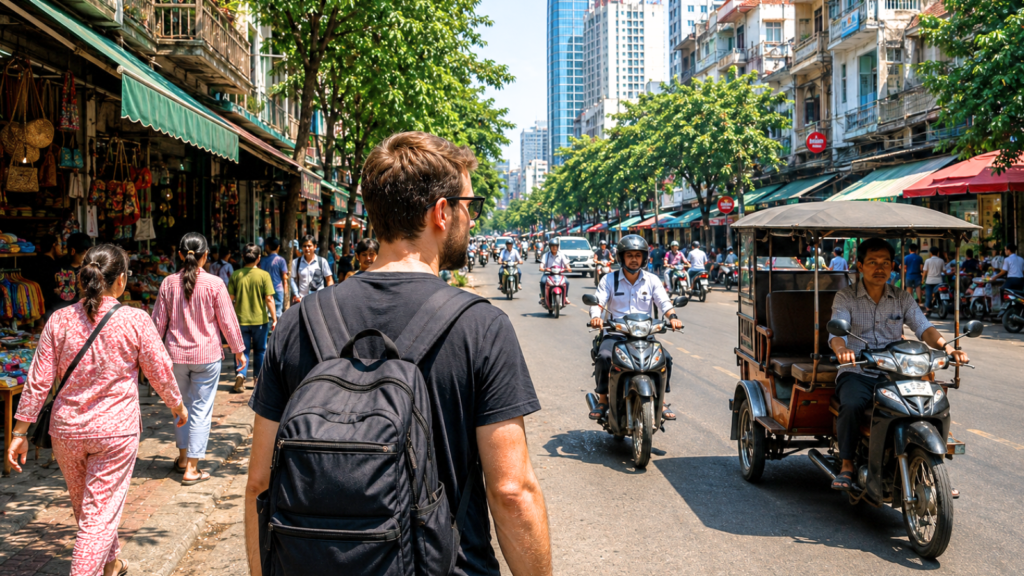
Key Documents for Teaching Jobs in Cambodia
Compared with neighbouring Vietnam, the documentation requirements in Cambodia for foreign teachers are far less prescriptive when it comes to securing a teaching-related work permit and an extended, multiple-entry visa.
While a university degree is welcomed by schools in Cambodia, it is not mandatory to obtain a work permit and related visa — a stark contrast to Vietnam. Likewise, if you’re a non-native English speaker who wants to teach in Cambodia, a solid English proficiency test result can strengthen your job prospects, but it’s not mandatory. In Vietnam, by comparison, an English proficiency test result — IELTS 7.0 or equivalent — is a non-negotiable requirement for a teaching-related work permit.
For teaching jobs in Cambodia, you will typically need a government-regulated TESOL, TEFL or CELTA qualification, such as the certification delivered by AVSE-TESOL in Phnom Penh, plus a clear criminal background check from your home country issued within the past six months.
Here’s some good news: unlike in Vietnam, foreign teachers in Cambodia generally do not need their documents notarised and legalised, potentially saving around US$300 in processing costs.
Is a Degree Needed for English Teaching Jobs in Cambodia?
Cambodia is one of those countries where it’s possible for a foreigner to legally work as an ESL teacher without a university degree. Certainly, a degree is welcomed by schools in Cambodia, but it’s not a mandatory requirement for an ESL teaching-related work permit and a 12-month, multiple-entry visa.
It’s fair to say that people without a degree who plan to teach in Cambodia need to make doubly sure their TESOL, TEFL or CELTA certification is a product of nationally recognised training in the country where the certificate comes from. Holding a “certificate” issued by a random limited liability company, or backed by a self-appointed accrediting entity, may well be called out for what it is.
Not having a degree and not having valid TESOL, TEFL or CELTA certification is “a bridge too far” for most reputable schools in Cambodia. Schools want substantive evidence that a prospective teacher has completed meaningful training, understands basic classroom management, and can plan and deliver lessons with confidence. Valid TESOL, TEFL and CELTA qualifications cover these key areas and provide a level of reassurance to schools that might otherwise be missing.
How Much Do Foreign English Teachers Earn in Cambodia?
From my observations, the salary range for foreign English teachers who are newcomers to Cambodia is between US$800.00 and US$1,200.00 a month. Some people are fortunate and earn more than this range, while others start below it. In Cambodia, salaries are typically paid in US dollars, and “perks” are uncommon. That said, anecdotally, around 20% of foreign English teachers have local medical cover included in their employment agreement.
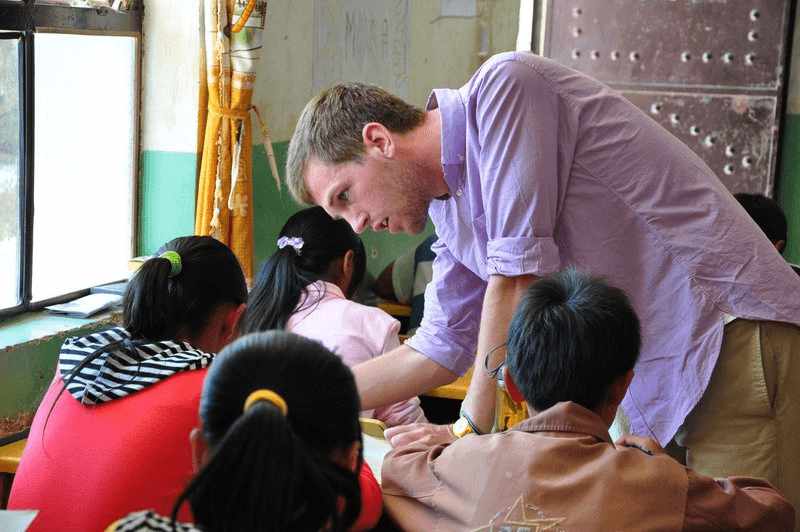
In practice, schools tend to consider various factors when determining what they’re prepared to offer, including degree status, TESOL, TEFL or CELTA certification, the availability of a criminal record check, nationality, presentation, disposition, and whether the teacher is a native or non-native English speaker.
Some of these factors may be viewed as sensitive or contentious by prospective teachers. However, the purpose here is simply to provide an accurate reflection of how the market operates, based on my observations, so that people can make informed decisions. My advice? Put yourself out there and let your knowledge, skills and professionalism do the talking.
Cost of Living for Foreign Teachers in Cambodia
Every now and again, I hear a foreigner say: “Why would I pursue English teaching jobs in Cambodia when salaries are typically between US$800 and US$1,200 a month?” Often, this is followed by a point about earning much more in their home country.
It’s a fair question. The answer is straightforward. Foreign teacher salaries in Cambodia need to be viewed in the context of the local cost of living. While the headline salary may look modest by Western standards, day-to-day living costs are also much lower. In contrast, many people in Western countries earn more on paper, yet live hand to mouth because the disparity between wages and the cost of living is so pronounced.
For perspective, it’s possible to rent a fully furnished apartment in downtown Phnom Penh for around US$250.00 a month — arrive with your bags and move straight in. Food, transport, phone data, the occasional beer, coffee, and other daily expenses should come in at around US$12.00 a day.
When you add accommodation to daily living costs, it’s clear that a foreign teacher salary in Cambodia allows you to comfortably pay your way — and even save a bit. This is the starting point, and with experience, things should only improve.

How Do Foreigners Find English Teaching Jobs in Cambodia?
Foreigners find English teaching jobs in Cambodia much the same way they find teaching jobs elsewhere. There’s no Cambodia-specific formula. It’s about having your paperwork in order — the right visa (Ordinary Visa E Class), relevant qualifications, and a sharp one-page CV with a professional head-and-shoulders photograph. It’s also about presenting yourself appropriately, being culturally aware, and doing the necessary legwork to connect with prospective employers. You might be wondering: what does that legwork involve? Read on.
First and foremost, Cambodian schools expect foreign teachers to be physically in the country before they’ll be considered. Over the past 20 years, I’m unaware of any teaching jobs in Cambodia being filled by someone who was outside the country during the application and interview process.
Once you’re on the ground, the legwork includes joining Teaching in Cambodia Facebook groups, enrolling in AVSE’s Teaching Jobs Abroad Program in Phnom Penh for hands-on job support, keeping an eye on ESL job boards such as Dave’s ESL Cafe, making it known far and wide that you’re looking for a teaching job in Cambodia, emailing schools directly, and even knocking on doors.
Work Permits and Visas for Foreign Teachers in Cambodia
The Work permit and related visa for English teaching jobs in Cambodia are separate documents, each valid for 12 months. Most foreign ESL teachers obtain both through school sponsorship.
When a school sponsors a work permit and 12-month visa for a new teacher, the cost payable to the Cambodian Government is typically around US$540.00. This cost is usually shared between the school and teacher, recognising that both parties carry some risk if the employment arrangement ends and the documents become null and void.
Ideally, a foreigner thinking about teaching English in Cambodia should enter the country on an Ordinary Visa E Class. This visa can be extended for up to 12 months with employer sponsorship and sits alongside the work permit. If a prospective teacher enters Cambodia on a Tourist Visa, they’ll need to do a “border run” to secure an Ordinary Visa E Class before attending job interviews. Why? Employers are reluctant to interview people without the right visa from the outset because it adds uncertainty, extra steps, and potential delays to the hiring process.
Core Inclusions in a Teaching Contract in Cambodia
Teaching contracts in Cambodia are as diverse as the parties who sign them. While there’s no standard format, there are four inclusions that new foreign teachers should respectfully consider non-negotiable.
- Market rate of pay: From my observations, a newcomer to teaching English in Cambodia can reasonably expect to be paid between US$800 and US$1,200 a month. Most foreign teachers in Cambodia are paid somewhere in the middle of that range. Anything less than US$800 should be considered unacceptable. Anything at the top of the range, or above, should be considered good fortune.
- Sensible work hours: Around 25 in-class hours a week is considered a full-time workload for a foreign ESL teacher. That said, it’s not indicative of the total workload, given that teachers have been planning lessons at their kitchen tables in the evenings and on weekends since time immemorial. The good news is that the lesson-planning workload drops off markedly around the six-month mark, when teachers start repeating lessons they’ve planned previously.
- Safe, respectful environment: Working conditions that are safe and respectful are a basic right of employees worldwide, including those engaged in English teaching jobs in Cambodia. This can be reflected in a contract through clauses covering workplace conduct, respectful behaviour, working hours, duties, professional development opportunities, and a clear process for raising and resolving concerns.
- Work permit and long-stay visa support: Holding a valid work permit and related long-stay visa gives foreign English teachers in Cambodia legal status and greater security of tenure. They’re also pivotal to successfully completing a teaching contract and remaining compliant with Cambodian regulations. The employment contract should clearly spell out the level of work permit and visa support the teacher will receive from the school, including who pays what, expected timeframes, required documents, and how matters will be handled if the employment arrangement ends early.
Best Cities in Cambodia for English Teaching Jobs
Anecdotally, more than 90% of ESL teaching jobs for foreigners in Cambodia are located in and around Phnom Penh. Teaching opportunities can also be found in Siem Reap, famous for the Angkor Wat temple complex, and in locations such as Battambang in western Cambodia and Sihanoukville on the country’s southern coast.
Teaching in Phnom Penh
From an ESL teaching jobs perspective, Phnom Penh is ‘ground zero’ in Cambodia, which is unsurprising given that it’s the country’s capital city and major population centre. Teaching opportunities for foreign ESL teachers are available in Phnom Penh year-round. The vast majority are at so-called international private schools catering for students from kindergarten through to the final year of high school.
Living and working in Phnom Penh is well-suited to foreign ESL teachers who prefer the hustle and bustle of city life, relatively easy access to services such as medical care, transport and reliable internet, and a wider choice of restaurants, shopping centres, and entertainment options.
Teaching in Siem Reap
Siem Reap is one of those ‘must visit’ destinations, so competition among foreigners for English teaching jobs is intense. The idea of living and working in the shadow of the world-famous Angkor Wat temple complex is highly appealing to foreign nationals, regardless of their vocation. There are ESL teaching jobs in Siem Reap, but from my observations, they tend to be the domain of people who have been on the ground in Cambodia for a year or two and have plenty of classroom hours under their belt.
There’s a lot to like about teaching English in Siem Reap, including:
- The low cost of living — noticeably lower than Phnom Penh
- A relaxed lifestyle similar to what you’d expect in a regional city or town in Australia and Canada.
- Highly motivated students who view English language skills as their pathway to a brighter future.
Teaching in Battambang
Battambang is Cambodia’s second-largest city. As an ESL teaching destination, it’s the obvious middle ground for those who are torn between what Phnom Penh and Siem Reap have to offer. In my opinion, Battambang is one of Cambodia’s hidden gems, but the word is getting out.
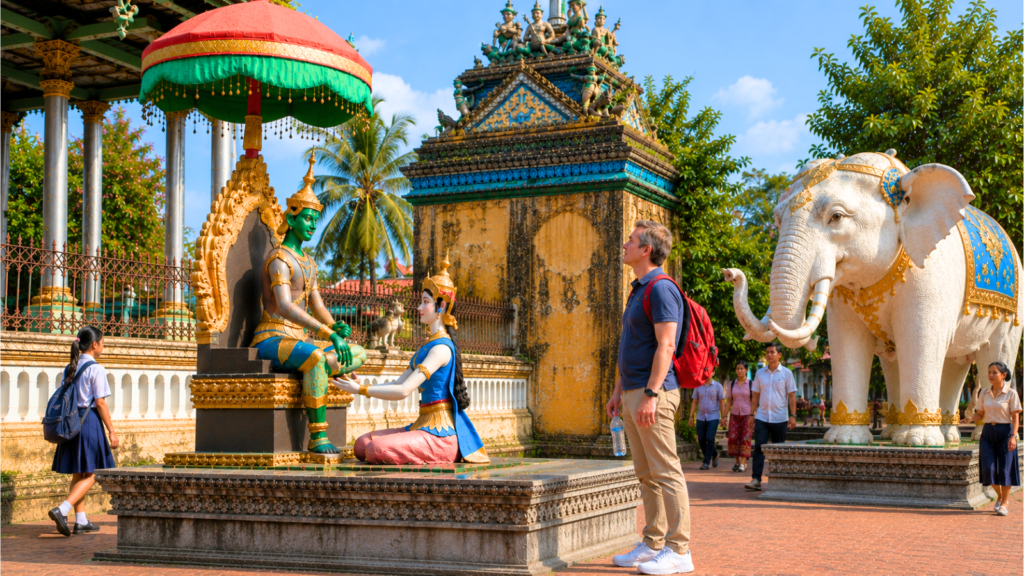
While the competition among foreigners for teaching jobs in Battambang is less intense than in Siem Reap, it’s tougher than Phnom Penh. Battambang may appeal to foreign teachers who want a more authentic Cambodian experience without feeling isolated from modern conveniences. The relatively low cost of living in Battambang is another attractive feature for foreign ESL teachers, although it needs to be balanced against the lower teacher salaries that are typically on offer.
Teaching in Sihanoukville
It wasn’t that long ago when Sihanoukville was a quintessential sleepy fishing village where you’d think yourself very lucky if you landed a teaching job there. It has changed markedly over the past 15 years or so. Nowadays, Sihanoukville is more like Macau’s younger sibling, with wall-to-wall foreign-owned and managed casinos, bright lights, and fewer opportunities for foreigners to immerse themselves in Cambodian culture. While this environment doesn’t appeal to me personally as a teaching destination, I understand that it may appeal to others.
Despite the massive transformation from sleepy outpost to gambling hub, there are still ESL teaching jobs available in Sihanoukville. The city may well suit foreign teachers who are comfortable with a more commercialised environment and appreciate having beaches and nearby islands to enjoy in their free time. The city’s commercial growth may also create opportunities for teachers with an interest in business English, hospitality English, and workplace communication classes.
Is Teaching English in Cambodia Worth It?
There is no doubt in my mind that teaching English in Cambodia is worth it, but the reality is that it won’t meet everyone’s expectations. Cambodia is oppressively hot, and many people find the unrelenting heat daunting. Parts of the country can be dirty by Western standards, and infrastructure is still developing in some areas. Abject poverty is also visible in places and can be confronting for newcomers. Probably most disconcerting for some Western visitors is the local food culture, which can include barbecued insects and other foods that may seem unusual to outsiders.
Succinctly, teaching in Cambodia is absolutely worth it for people who are adaptable, culturally sympathetic, and mindful that they are visitors in someone else’s country. Those who expect everything to feel familiar and comfortable may struggle. That said, one of the great things about teaching English abroad is the opportunity to get outside your comfort zone — and that’s certainly on offer in Cambodia.
Conclusion
In this post, I’ve touched on why Cambodia appeals to foreign English teachers, key documents for teaching in Cambodia, the typical salary range for newcomers, cost of living factors, how and where to find a teaching job, work permits and visas, employment contracts, and more. What’s the key takeaway? Cambodia is a brilliant ESL teaching destination, but it’s not for everyone. If you’re looking for a destination with more Western traits, there are plenty of countries that may be a better fit. If you’re adaptable, have realistic expectations, and embrace cultural immersion, Cambodia could be the teaching destination you’ve been looking for. Certainly, Cambodia has exceeded my personal expectations and proven to be an excellent fit for my lifestyle and professional goals.
About the writer: Peter Goudge has been living and working in Southeast Asia, specifically in Cambodia and Vietnam, since 2006. He is the Managing Director (and founderr) of Australian Vocational Skills and Education (AVSE-TESOL). AVSE-TESOL offers various pathways to ESL teaching jobs in Cambodia and Vietnam. You can learn more about Peter Goudge and AVSE-TESOL here: www.avse.edu.vn
Recent Comments