English Teaching Jobs in Cambodia: Salary, Visas & Requirements

English Teaching Jobs in Cambodia: Salary, Visas & Requirements

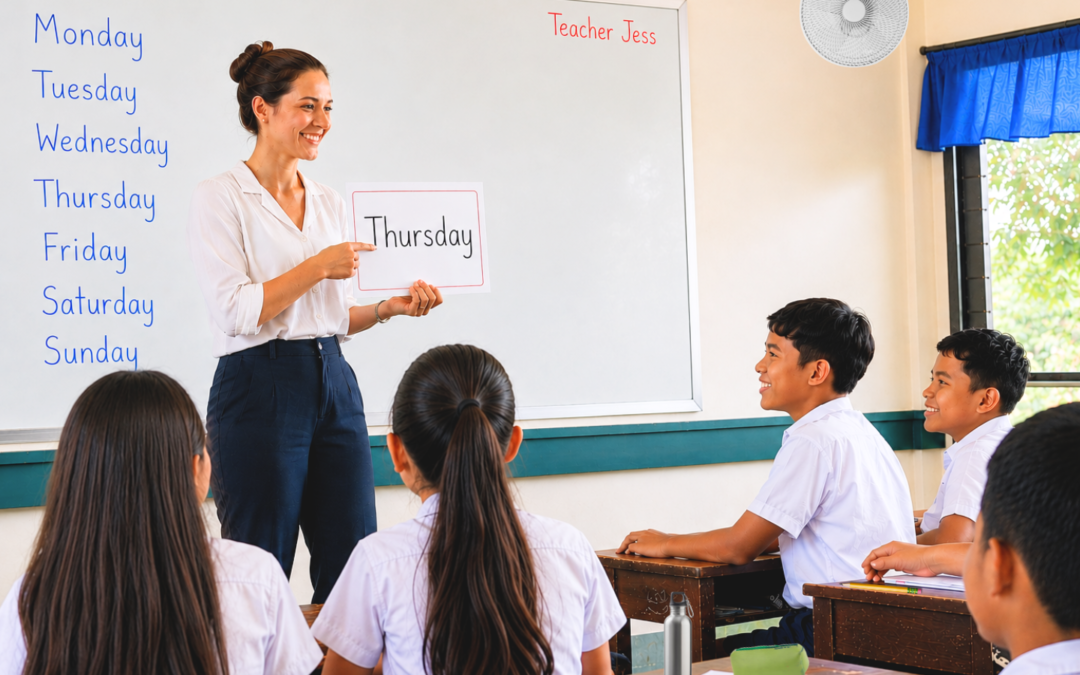
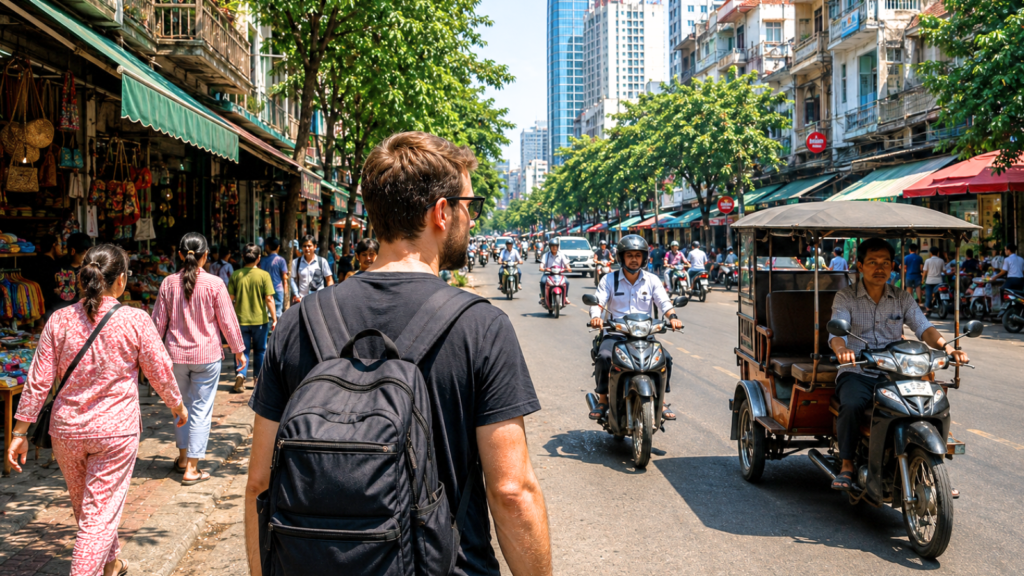
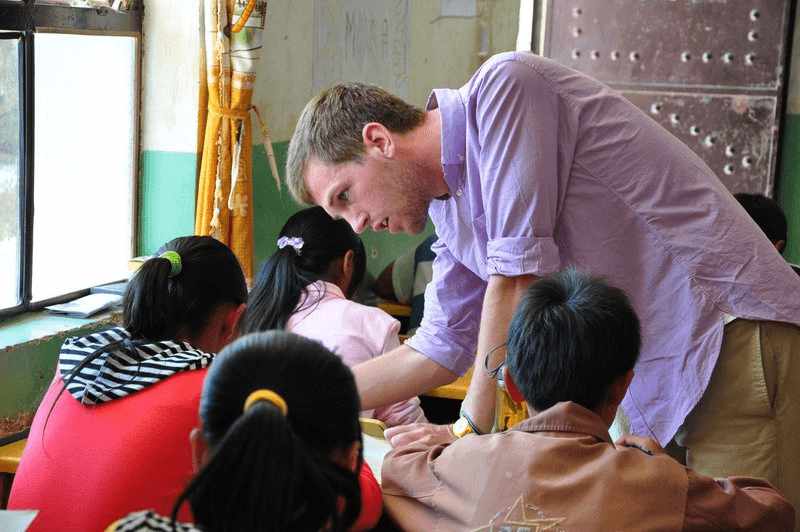
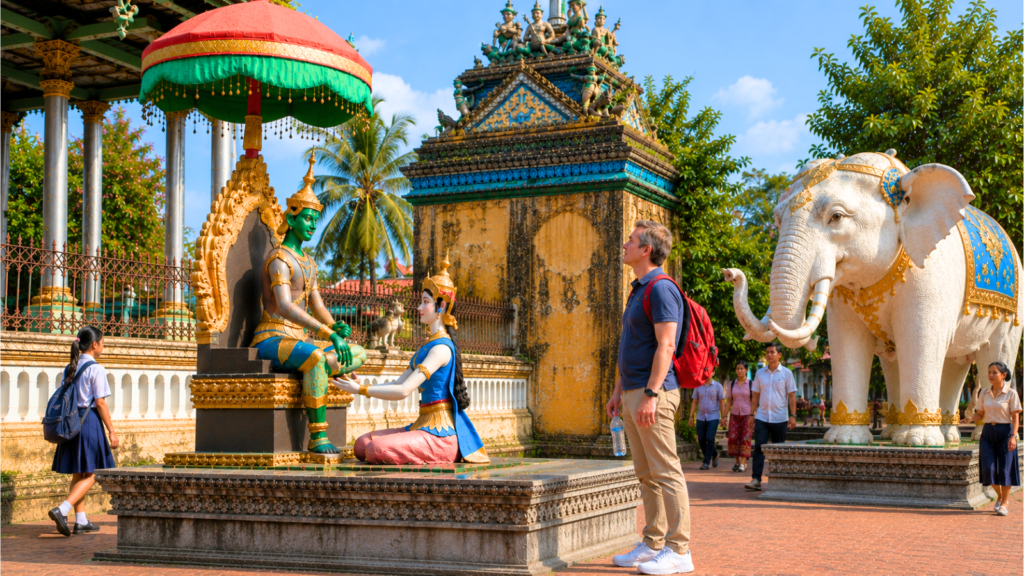
For many foreigners, English teaching jobs in Cambodia represent more than a way to earn some money — they’re an opportunity to immerse yourself in Khmer culture, build your teaching skills, make lifelong friends and genuinely help others who might not be as fortunate by virtue of where they were born. Compared with other ESL teaching destinations in Southeast Asia, Cambodia remains relatively accessible to newcomers, including people without a university degree. True, teaching in Cambodia is not always what people expect. Before packing your bags and heading off to Phnom Penh, Siem Reap, Battambang or elsewhere in Cambodia to teach English, it’s important to grasp how the market works, what schools are looking for in a foreign ESL teacher, where the jobs are located, and whether the lifestyle will suit you.

Why Cambodia Appeals to Foreign English Teachers

While no two people are the same, foreign English teachers often weigh up similar factors when choosing a teaching destination, including demand for teachers, cost of living, visa requirements, lifestyle, and how they will be received by the local community. From my observations on the ground, Cambodia rates well in each of these areas — and several others. Arguably one of the last frontiers for teaching ESL worldwide, Cambodia is especially attractive to newcomers because of its relaxed expat lifestyle, accessible entry requirements, genuine opportunities for paid teaching work, and the fact that a university degree is not mandatory.

At the centre of Cambodia’s appeal to foreign English teachers is a simple but powerful combination: the pathway into paid teaching work is realistic, and the lifestyle benefits can be substantial. For those who prepare properly — with a clear background check, government-regulated TESOL, TEFL or CELTA certification, cultural awareness, realistic expectations, and respect for the fact they are visitors — teaching ESL in Cambodia can be both viable and rewarding.

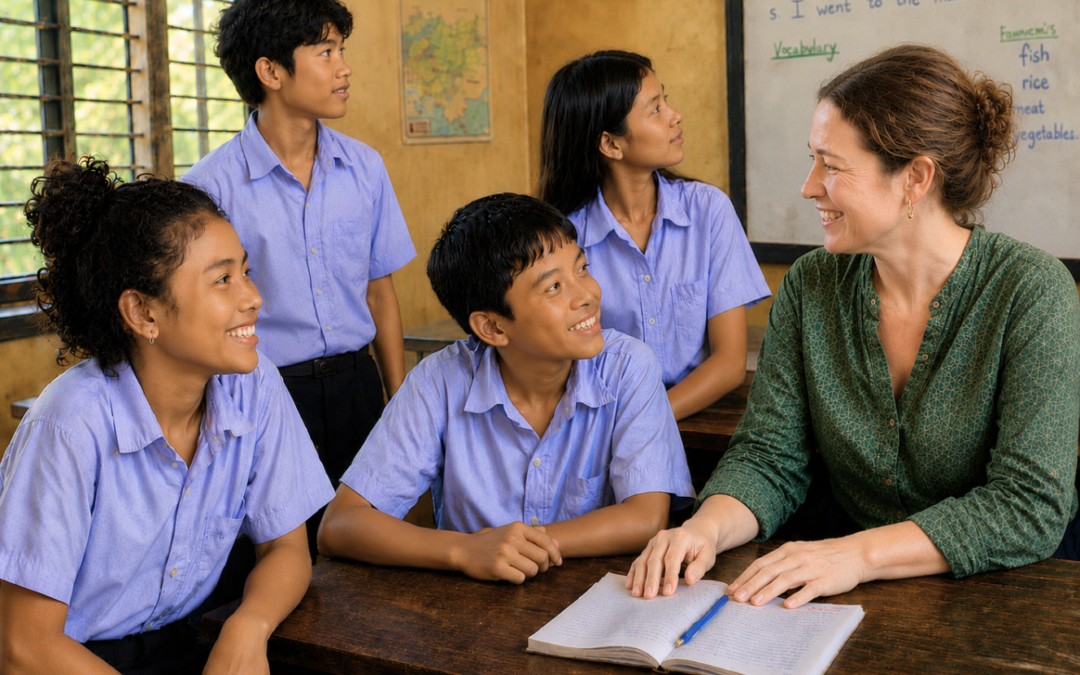
foreign teacher in cambodia

Key Documents for Teaching Jobs in Cambodia

Compared with neighbouring Vietnam, the documentation requirements in Cambodia for foreign teachers are far less prescriptive when it comes to securing a teaching-related work permit and an extended, multiple-entry visa.

While a university degree is welcomed by schools in Cambodia, it is not mandatory to obtain a work permit and related visa — a stark contrast to Vietnam. Likewise, if you’re a non-native English speaker who wants to teach in Cambodia, a solid English proficiency test result can strengthen your job prospects, but it’s not mandatory. In Vietnam, by comparison, an English proficiency test result — IELTS 7.0 or equivalent — is a non-negotiable requirement for a teaching-related work permit.

For teaching jobs in Cambodia, you will typically need a government-regulated TESOL, TEFL or CELTA qualification, such as the certification delivered by AVSE-TESOL in Phnom Penh, plus a clear criminal background check from your home country issued within the past six months.

Here’s some good news: unlike in Vietnam, foreign teachers in Cambodia generally do not need their documents notarised and legalised, potentially saving around US$300 in processing costs.

Is a Degree Needed for English Teaching Jobs in Cambodia?

Cambodia is one of those countries where it’s possible for a foreigner to legally work as an ESL teacher without a university degree. Certainly, a degree is welcomed by schools in Cambodia, but it’s not a mandatory requirement for an ESL teaching-related work permit and a 12-month, multiple-entry visa.

It’s fair to say that people without a degree who plan to teach in Cambodia need to make doubly sure their TESOL, TEFL or CELTA certification is a product of nationally recognised training in the country where the certificate comes from. Holding a “certificate” issued by a random limited liability company, or backed by a self-appointed accrediting entity, may well be called out for what it is.

Not having a degree and not having valid TESOL, TEFL or CELTA certification is “a bridge too far” for most reputable schools in Cambodia. Schools want substantive evidence that a prospective teacher has completed meaningful training, understands basic classroom management, and can plan and deliver lessons with confidence. Valid TESOL, TEFL and CELTA qualifications cover these key areas and provide a level of reassurance to schools that might otherwise be missing.

How Much Do Foreign English Teachers Earn in Cambodia?

From my observations, the salary range for foreign English teachers who are newcomers to Cambodia is between US$800.00 and US$1,200.00 a month. Some people are fortunate and earn more than this range, while others start below it. In Cambodia, salaries are typically paid in US dollars, and “perks” are uncommon. That said, anecdotally, around 20% of foreign English teachers have local medical cover included in their employment agreement.

english teaching jobs in cambodia


In practice, schools tend to consider various factors when determining what they’re prepared to offer, including degree status, TESOL, TEFL or CELTA certification, the availability of a criminal record check, nationality, presentation, disposition, and whether the teacher is a native or non-native English speaker.

Some of these factors may be viewed as sensitive or contentious by prospective teachers. However, the purpose here is simply to provide an accurate reflection of how the market operates, based on my observations, so that people can make informed decisions. My advice? Put yourself out there and let your knowledge, skills and professionalism do the talking.

Cost of Living for Foreign Teachers in Cambodia

Every now and again, I hear a foreigner say: “Why would I pursue English teaching jobs in Cambodia when salaries are typically between US$800 and US$1,200 a month?” Often, this is followed by a point about earning much more in their home country.

It’s a fair question. The answer is straightforward. Foreign teacher salaries in Cambodia need to be viewed in the context of the local cost of living. While the headline salary may look modest by Western standards, day-to-day living costs are also much lower. In contrast, many people in Western countries earn more on paper, yet live hand to mouth because the disparity between wages and the cost of living is so pronounced.

For perspective, it’s possible to rent a fully furnished apartment in downtown Phnom Penh for around US$250.00 a month — arrive with your bags and move straight in. Food, transport, phone data, the occasional beer, coffee, and other daily expenses should come in at around US$12.00 a day.

When you add accommodation to daily living costs, it’s clear that a foreign teacher salary in Cambodia allows you to comfortably pay your way — and even save a bit. This is the starting point, and with experience, things should only improve.


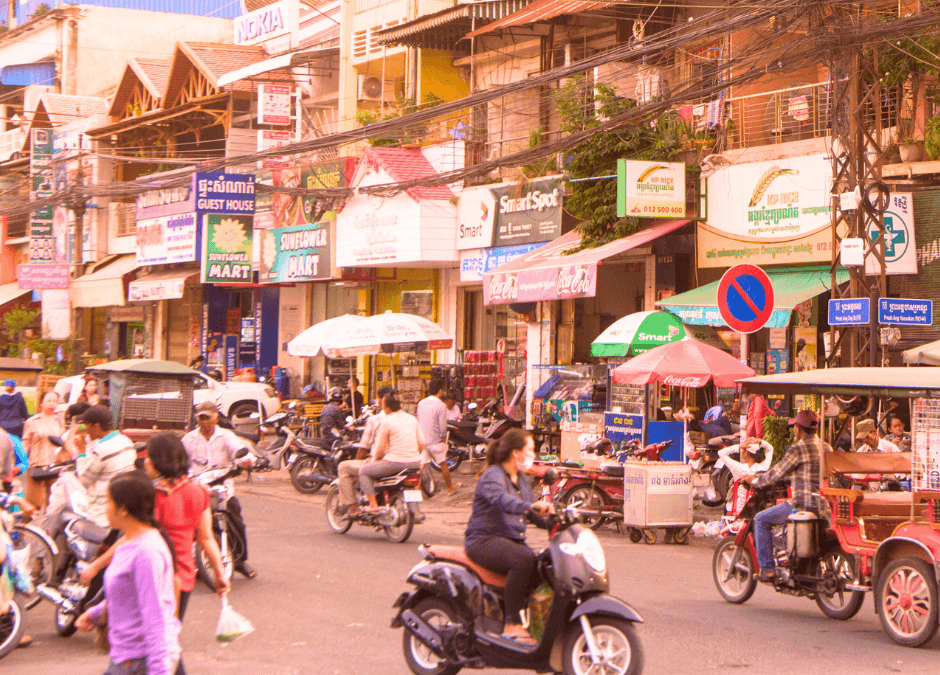
cost of living in cambodia

How Do Foreigners Find English Teaching Jobs in Cambodia?

Foreigners find English teaching jobs in Cambodia much the same way they find teaching jobs elsewhere. There’s no Cambodia-specific formula. It’s about having your paperwork in order — the right visa (Ordinary Visa E Class), relevant qualifications, and a sharp one-page CV with a professional head-and-shoulders photograph. It’s also about presenting yourself appropriately, being culturally aware, and doing the necessary legwork to connect with prospective employers. You might be wondering: what does that legwork involve? Read on.

First and foremost, Cambodian schools expect foreign teachers to be physically in the country before they’ll be considered. Over the past 20 years, I’m unaware of any teaching jobs in Cambodia being filled by someone who was outside the country during the application and interview process.

Once you’re on the ground, the legwork includes joining Teaching in Cambodia Facebook groups, enrolling in AVSE’s Teaching Jobs Abroad Program in Phnom Penh for hands-on job support, keeping an eye on ESL job boards such as Dave’s ESL Cafe, making it known far and wide that you’re looking for a teaching job in Cambodia, emailing schools directly, and even knocking on doors.

Work Permits and Visas for Foreign Teachers in Cambodia

The Work permit and related visa for English teaching jobs in Cambodia are separate documents, each valid for 12 months. Most foreign ESL teachers obtain both through school sponsorship.

When a school sponsors a work permit and 12-month visa for a new teacher, the cost payable to the Cambodian Government is typically around US$540.00. This cost is usually shared between the school and teacher, recognising that both parties carry some risk if the employment arrangement ends and the documents become null and void.

Ideally, a foreigner thinking about teaching English in Cambodia should enter the country on an Ordinary Visa E Class. This visa can be extended for up to 12 months with employer sponsorship and sits alongside the work permit. If a prospective teacher enters Cambodia on a Tourist Visa, they’ll need to do a “border run” to secure an Ordinary Visa E Class before attending job interviews. Why? Employers are reluctant to interview people without the right visa from the outset because it adds uncertainty, extra steps, and potential delays to the hiring process.


Core Inclusions in a Teaching Contract in Cambodia

Teaching contracts in Cambodia are as diverse as the parties who sign them. While there’s no standard format, there are four inclusions that new foreign teachers should respectfully consider non-negotiable.

  1. Market rate of pay: From my observations, a newcomer to teaching English in Cambodia can reasonably expect to be paid between US$800 and US$1,200 a month. Most foreign teachers in Cambodia are paid somewhere in the middle of that range. Anything less than US$800 should be considered unacceptable. Anything at the top of the range, or above, should be considered good fortune.
  2. Sensible work hours: Around 25 in-class hours a week is considered a full-time workload for a foreign ESL teacher. That said, it’s not indicative of the total workload, given that teachers have been planning lessons at their kitchen tables in the evenings and on weekends since time immemorial. The good news is that the lesson-planning workload drops off markedly around the six-month mark, when teachers start repeating lessons they’ve planned previously.
  3. Safe, respectful environment: Working conditions that are safe and respectful are a basic right of employees worldwide, including those engaged in English teaching jobs in Cambodia. This can be reflected in a contract through clauses covering workplace conduct, respectful behaviour, working hours, duties, professional development opportunities, and a clear process for raising and resolving concerns.
  4. Work permit and long-stay visa support: Holding a valid work permit and related long-stay visa gives foreign English teachers in Cambodia legal status and greater security of tenure. They’re also pivotal to successfully completing a teaching contract and remaining compliant with Cambodian regulations. The employment contract should clearly spell out the level of work permit and visa support the teacher will receive from the school, including who pays what, expected timeframes, required documents, and how matters will be handled if the employment arrangement ends early.

Best Cities in Cambodia for English Teaching Jobs

Anecdotally, more than 90% of ESL teaching jobs for foreigners in Cambodia are located in and around Phnom Penh. Teaching opportunities can also be found in Siem Reap, famous for the Angkor Wat temple complex, and in locations such as Battambang in western Cambodia and Sihanoukville on the country’s southern coast.

Teaching in Phnom Penh

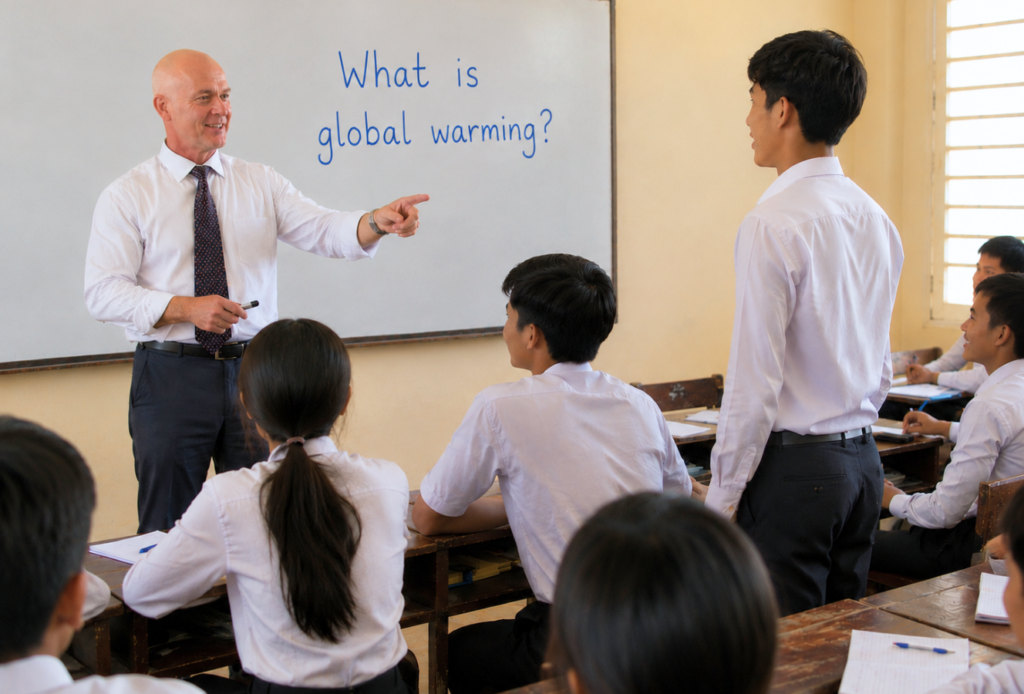
From an ESL teaching jobs perspective, Phnom Penh is ‘ground zero’ in Cambodia, which is unsurprising given that it’s the country’s capital city and major population centre. Teaching opportunities for foreign ESL teachers are available in Phnom Penh year-round. The vast majority are at so-called international private schools catering for students from kindergarten through to the final year of high school.

Living and working in Phnom Penh is well-suited to foreign ESL teachers who prefer the hustle and bustle of city life, relatively easy access to services such as medical care, transport and reliable internet, and a wider choice of restaurants, shopping centres, and entertainment options.

Teaching in Siem Reap

Siem Reap is one of those ‘must visit’ destinations, so competition among foreigners for English teaching jobs is intense. The idea of living and working in the shadow of the world-famous Angkor Wat temple complex is highly appealing to foreign nationals, regardless of their vocation. There are ESL teaching jobs in Siem Reap, but from my observations, they tend to be the domain of people who have been on the ground in Cambodia for a year or two and have plenty of classroom hours under their belt.

There’s a lot to like about teaching English in Siem Reap, including:

  1. The low cost of living — noticeably lower than Phnom Penh
  2. A relaxed lifestyle similar to what you’d expect in a regional city or town in Australia and Canada.  
  3. Highly motivated students who view English language skills as their pathway to a brighter future.

Teaching in Battambang

Battambang is Cambodia’s second-largest city. As an ESL teaching destination, it’s the obvious middle ground for those who are torn between what Phnom Penh and Siem Reap have to offer. In my opinion, Battambang is one of Cambodia’s hidden gems, but the word is getting out.

english teaching jobs in battambang

While the competition among foreigners for teaching jobs in Battambang is less intense than in Siem Reap, it’s tougher than Phnom Penh. Battambang may appeal to foreign teachers who want a more authentic Cambodian experience without feeling isolated from modern conveniences. The relatively low cost of living in Battambang is another attractive feature for foreign ESL teachers, although it needs to be balanced against the lower teacher salaries that are typically on offer.

Teaching in Sihanoukville

It wasn’t that long ago when Sihanoukville was a quintessential sleepy fishing village where you’d think yourself very lucky if you landed a teaching job there. It has changed markedly over the past 15 years or so. Nowadays, Sihanoukville is more like Macau’s younger sibling, with wall-to-wall foreign-owned and managed casinos, bright lights, and fewer opportunities for foreigners to immerse themselves in Cambodian culture. While this environment doesn’t appeal to me personally as a teaching destination, I understand that it may appeal to others.

Despite the massive transformation from sleepy outpost to gambling hub, there are still ESL teaching jobs available in Sihanoukville. The city may well suit foreign teachers who are comfortable with a more commercialised environment and appreciate having beaches and nearby islands to enjoy in their free time. The city’s commercial growth may also create opportunities for teachers with an interest in business English, hospitality English, and workplace communication classes.

Is Teaching English in Cambodia Worth It?

There is no doubt in my mind that teaching English in Cambodia is worth it, but the reality is that it won’t meet everyone’s expectations. Cambodia is oppressively hot, and many people find the unrelenting heat daunting. Parts of the country can be dirty by Western standards, and infrastructure is still developing in some areas. Abject poverty is also visible in places and can be confronting for newcomers. Probably most disconcerting for some Western visitors is the local food culture, which can include barbecued insects and other foods that may seem unusual to outsiders.

Succinctly, teaching in Cambodia is absolutely worth it for people who are adaptable, culturally sympathetic, and mindful that they are visitors in someone else’s country. Those who expect everything to feel familiar and comfortable may struggle. That said, one of the great things about teaching English abroad is the opportunity to get outside your comfort zone — and that’s certainly on offer in Cambodia.

Conclusion

In this post, I’ve touched on why Cambodia appeals to foreign English teachers, key documents for teaching in Cambodia, the typical salary range for newcomers, cost of living factors, how and where to find a teaching job, work permits and visas, employment contracts, and more. What’s the key takeaway? Cambodia is a brilliant ESL teaching destination, but it’s not for everyone. If you’re looking for a destination with more Western traits, there are plenty of countries that may be a better fit. If you’re adaptable, have realistic expectations, and embrace cultural immersion, Cambodia could be the teaching destination you’ve been looking for. Certainly, Cambodia has exceeded my personal expectations and proven to be an excellent fit for my lifestyle and professional goals.


About the writer:
Peter Goudge has been living and working in Southeast Asia, specifically in Cambodia and Vietnam, since 2006. He is the Managing Director (and founderr) of Australian Vocational Skills and Education (AVSE-TESOL). AVSE-TESOL offers various pathways to ESL teaching jobs in Cambodia and Vietnam. You can learn more about Peter Goudge and AVSE-TESOL here: www.avse.edu.vn

Moving to Cambodia: I Left America for a New Life in Phnom Penh

Moving to Cambodia: I Left America for a New Life in Phnom Penh

When word got out among my family and friends in Detroit, Michigan, that I was contemplating moving to Cambodia, the responses were interesting: “Gosh.” “That’s huge!” “Are you sure that’s wise?” “You’re joking!” “Where is it?” Overwhelmingly, though, one response stood out: “Why Cambodia?”

Cambodia isn’t an obvious destination for Americans considering a move abroad, for reasons that are entirely understandable. Over the past two centuries, the country has endured foreign occupation, border disputes, outright war, genocide, famine and profound social upheaval.

My decision to move to Cambodia almost three months ago was based on four key factors:

  1. an interest in the country’s French colonial past, driven by my own French-American heritage;
  2. a family story connected to the Vietnam War era that never had a proper ending;
  3. the lower cost of living; and
  4. a long-held desire to teach English in a foreign country.                                                                                         

In the sections that follow, I’ll look at each of those four factors in turn, starting with the French connection that first drew my attention to Cambodia. In addition, I will share my first impressions of Cambodian people and what I have learned since moving to Cambodia.

My French Connection to Cambodia


I grew up in a French-speaking household in the United States. As a result, I still instinctively use the word Cambodge, the French name for Cambodia. Some people find this amusing. Others assume it’s an error of some kind. For me, though, Cambodge is simply the name I grew up hearing.

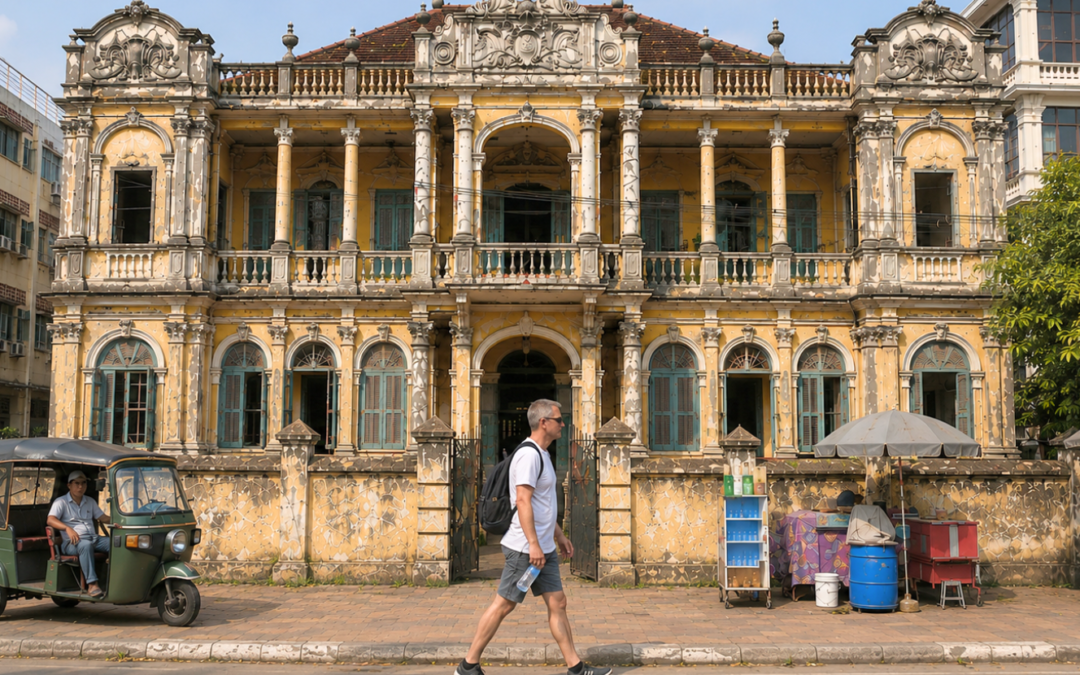
More than 70 years after independence, French influence can still be seen in aspects of Cambodia’s architecture, food, language and everyday life.


french architecture in phnom penh


True, travelling to France itself would have been the most obvious choice for someone like me who wanted to explore their French connection. Cambodia, though, offered something different: an opportunity to experience part of that shared French history while also immersing myself in a culture that is uniquely Khmer. For me, that was hard to knock back.

A Family Story That Never Had a Proper Ending


The second reason that moving to Cambodia made perfect sense to me is even more personal than exploring the shared French connection.

Growing up in Detroit, I couldn’t help but notice that whenever Vietnam, Cambodia or Laos appeared on television, my father would quietly turn his attention to something else. On occasions, he would simply get up and leave the room. While I noticed it, I never gave it much thought.

At my father’s funeral, I learned for the first time that he had an older brother named Jacques who was drafted to serve in the US military in Vietnam, literally two months after obtaining American citizenship. The story goes that Jacques disappeared somewhere in Cambodia’s Svay Rieng Province, close to the Vietnamese border, in March 1970. Jacques was presumed dead, but details surrounding his disappearance remained unclear.


moving to cambodia


Looking back, my dad’s reaction whenever Vietnam, Cambodia or Laos appeared on television made sense. It was a reminder of Jacques, his older brother. It was also a way of dealing with grief.

I cannot undo the past, and I don’t expect to solve a mystery that has remained unresolved for more than fifty years. What I can do while living in Cambodia is spend some time in Svay Rieng Province and search for whatever information may still exist. It might give surviving family members some measure of closure, something my father never found in his lifetime. It might not. Either way, it’s important to me.

The Cost of Living in Cambodia Is Appealing


It’s fair to say that exploring a shared French connection and searching for information about my Uncle Jacques were emotional reasons behind my decision to move to Cambodia. Some family and friends in Detroit might be shocked to learn that emotion had any influence whatsoever on my decision-making. They’ll be comforted to know that the prospect of enjoying a much lower cost of living also weighed heavily on my mind as I contemplated the move.

Like many people in the United States, I found myself in mundane jobs in Detroit, working long hours just to pay the bills. There was never much money left over each fortnight to actually live my best life — travel, eat out occasionally, indulge my passion for live music and suchlike. I genuinely felt like a mouse on one of those wheels that just keeps spinning, with no destination in sight.

My research on Google, YouTube and similar platforms before departing the United States painted a rosy picture of quality of life and affordability in Cambodia. The reality on the ground in Phnom Penh has been even better than I expected, driven in part by the favorable balance between what foreign English teachers can typically earn and everyday living expenses.


After arriving in Phnom Penh, I rented a modest one-room apartment downtown on Street 19. The rent is US$275 per month, with utilities adding another US$50 or so.

When accommodation is added to my everyday expenses, I can comfortably live in Phnom Penh for under US$700 a month without cutting corners and still save around 30% of my income. In contrast, I wasn’t saving a dime in America — and had to shovel snow for the better part of six months each year just to get out of my driveway.

Making the Move into ESL Teaching


Before moving to Cambodia, I knew I would need some form of income if I intended to stay for an extended period. Teaching English seemed like the obvious choice.

My research indicated that teaching opportunities were plentiful for foreigners with a good command of English, the right demeanor and valid certification. I was confident my English skills and personal demeanor would be viewed favorably, but the certification requirement was a glaring shortfall.

Fortunately, I found AVSE-TESOL not far from my downtown apartment, completed their in-class government-regulated TESOL program over four weeks, and landed a decent ESL teaching job within two weeks of finishing the course.


teaching esl in cambodia


The starting salary of US$1,250 per month gave me immediate financial stability, structure and an opportunity to contribute positively to the local community. Importantly, I feel good about myself and the world around me. I didn’t feel that in Detroit.

First Impressions of Cambodian People


Ask me what stands out about life in Cambodia, and you might expect I’d mention Angkor Wat, the food, affordable living, the tropical climate or rewarding work. All of those things certainly deserve a mention, but overwhelmingly, the answer is the generosity of local people.

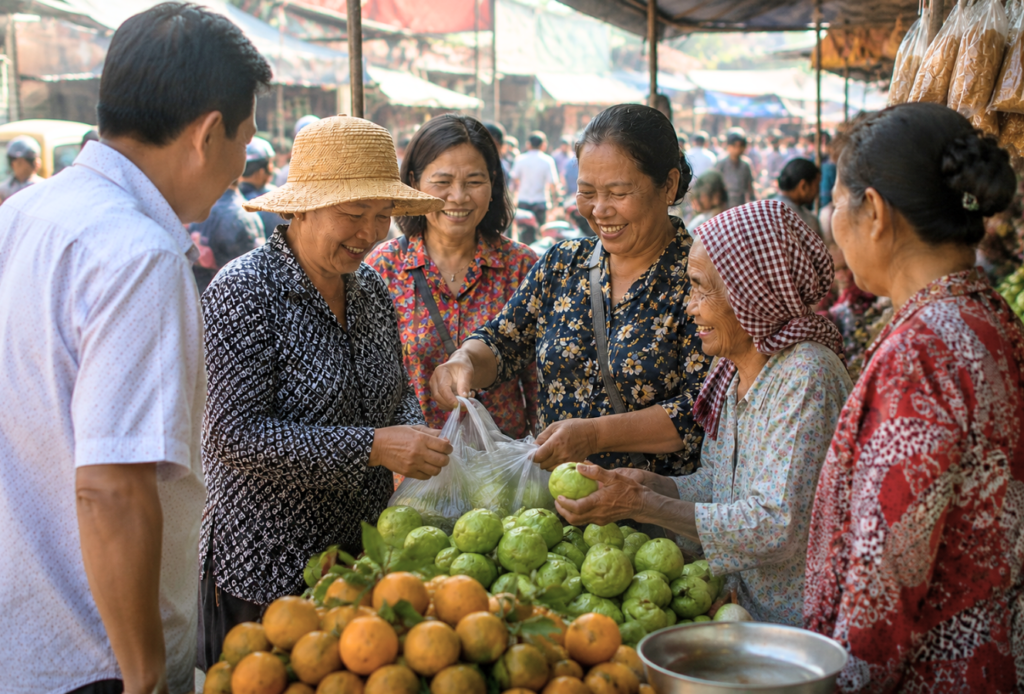
Cambodians smile a lot. It almost feels like an ingrained part of daily life. They’re patient. They go out of their way to help. Whether I’m interacting with neighbors, colleagues, students, market vendors or complete strangers, I have only encountered genuine kindness. 


moving to cambodia


That’s not to say Cambodia is perfect or some kind of utopia. It’s not — far from it.

The country can be confronting at times: the heat, the dust, the visible poverty, the legacy of genocide, famine and landmines, and the rapid spread of foreign-backed casinos. For some visitors and would-be expats, those realities can be difficult to look past.

Even so, I’d argue that the generosity of local people, coupled with the opportunity to lead a happy and fulfilling life, outweighs the country’s shortcomings.

What I’ve Learned Since Moving to Cambodia


While I have only been in Cambodia for a relatively short period, what I’ve learned already could fill a book, with each chapter revealing another layer of the country and the people who live here. Allow me to shine a light on three lessons that may be especially relevant to the people most likely to read this post.

First, to a large extent, we control our own destiny. I was well and truly over what the United States was dishing up for me personally. So I threw caution to the wind and moved almost 9,000 miles from the place I had called home my entire life.

I’m nothing special. I don’t have a college degree. I’m a bit rough around the edges, with a trades background. In other words, I’m an average Joe. If I can take practical steps towards achieving a better quality of life, then so can you. From personal experience, putting one foot in front of the other is a great way to start the journey.

Second, working as a foreign ESL teacher in Cambodia has got to be right up there with the most rewarding jobs on planet Earth. The pay is exceptionally good when compared with the cost of living. Unlike in many Western countries, teachers are genuinely respected in Cambodia, occupying a position of high status within Cambodian culture.

The students are highly motivated, the work hours are sensible, and you get to see tangible results from your efforts in a relatively short period of time. All of those factors have a positive influence on how foreign ESL teachers in Cambodia see themselves and the world around them.


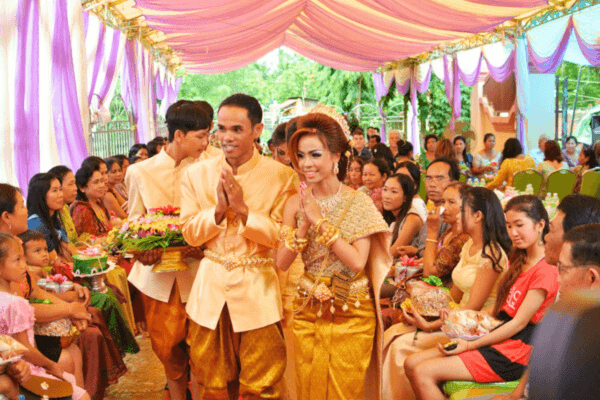
cambodian people


Third, there’s a lot that Western culture could learn from Eastern culture. For example, Cambodia has shown me that life does not always need to be rushed, measured, judged or overcomplicated. There is real value in patience, humility, family, community and remembering that the sun will come up tomorrow, whatever happens.

Cambodia has a way of slowing you down. There are constant subtle reminders that people matter more than schedules, relationships matter more than transactions, happiness comes from within, and a peaceful life is something to be treasured.

Conclusion: Was Moving to Cambodia the Right Decision?


Nobody knows what’s around the corner, and the reality is that I’ve only been on the ground in Phnom Penh for a few months. That said, if I were asked today, “Was moving to Cambodia the right decision?”, the answer would be a resounding yes.

The reasons for that resounding yes are both practical and deeply personal. I’m reconnecting with my French heritage every time I take a walk through the streets of Phnom Penh. I love the more affordable lifestyle. Working as an ESL teacher in Cambodia allows me to fulfil my long-held dream of teaching English in a foreign country. During the upcoming school holidays, I’ll travel to Svay Rieng Province to begin my search for information about Jacques, my father’s brother, who disappeared during the Vietnam War years. All of those factors played a role in my decision to move to Cambodia.

Beyond all of the above, it’s the generosity, patience and warmth of local people that have made Cambodia feel like home. For that reason alone, moving here was the right decision. I’m exactly where I need to be.


About the writer: Antoine Le Bec has French-American heritage. He travelled to Cambodia in early 2026, partly to explore his French roots, seek closure on a family tragedy dating back to the 1970s, enjoy a lower cost of living and teach English in Phnom Penh. Antoine’s blog post, Moving to Cambodia: I Left America for a New Life in Phnom Penh, is heartfelt, personal and easy to read. Enjoy!


Cambodge, Cambodia, Khmer Empire and Republic: Same Place?

Cambodge, Cambodia, Khmer Empire and Republic: Same Place?

If you’re considering teaching English in Cambodia, chances are you’ve been doing plenty of research. During that process, you may have come across references to Cambodge, Cambodia, the Khmer Empire and the Khmer Republic. At first glance, the different names can be confusing. Do they all refer to the same place?

The answer is yes — but with an important caveat.

While Cambodge, Cambodia, the Khmer Empire and the Khmer Republic all relate to the same broad geographical region, they represent very different periods in the country’s history. Each name reflects a distinct era shaped by different political systems, cultural influences and historical events.

Understanding these differences will not only help you make sense of Cambodia’s past but also provide valuable context whether you’re considering teaching English in Cambodia, retiring there or simply planning a visit.

The Khmer Empire: Where the Story Begins

Whether you’re more familiar with the names Cambodge, Cambodia or the Khmer Republic, the origins of the modern Cambodian nation can be traced back to the Khmer Empire.

From the 9th to the 15th centuries, the Khmer Empire sprawled across large parts of Southeast Asia, including areas that now form Cambodia, Thailand, Laos and Vietnam. It was one of the most powerful civilisations in the region and left behind a legacy that continues to shape Cambodian identity today.

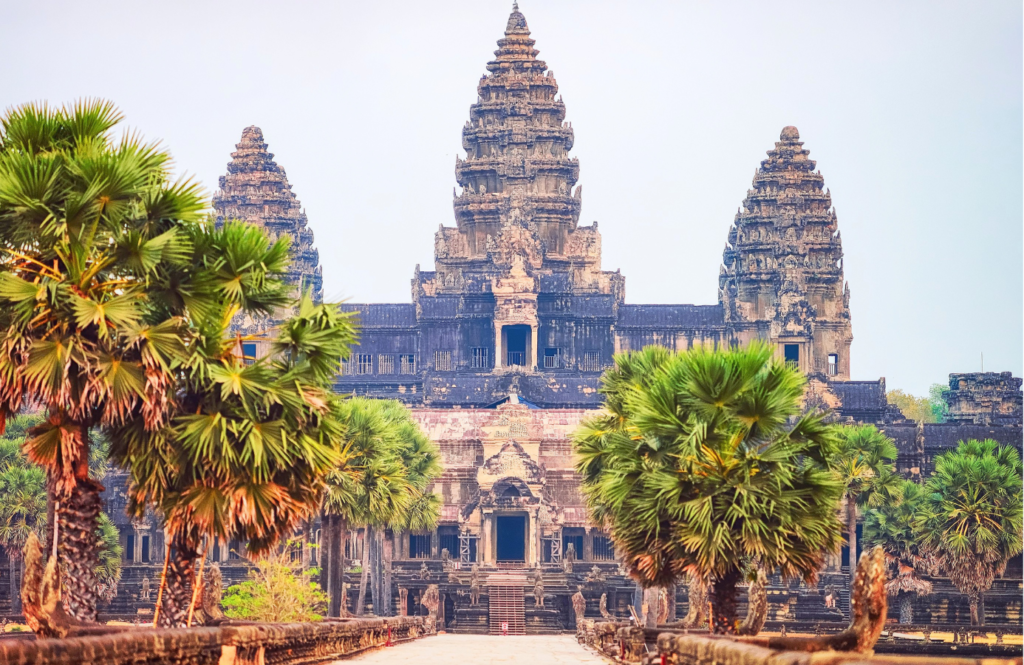
The Khmer Empire is remembered for far more than territorial expansion. Historians regularly point to its advanced irrigation systems, sophisticated administration and extraordinary architectural achievements. The most famous example is Angkor Wat, which remains one of the world’s most impressive religious monuments and Cambodia’s most recognisable national symbol.


khmer empire


Like most great empires the world has known, the Khmer Empire eventually declined. Political instability, conflict with neighbouring kingdoms and changing trade patterns all contributed to its weakening during the 15th century. Ultimately, the Khmer Emire disappeared, but its culture did not.

The Khmer language, customs, traditions and religious practices endured and continued to influence subsequent generations. Modern Cambodia still draws heavily upon the foundations established during the Khmer Empire, making this remarkable civilisation far more than simply a chapter in a history book.

Cambodge: Cambodia Under French Colonial Rule

The next major chapter in Cambodia’s story began in 1863 when the country became a French protectorate. Together with Vietnam and Laos, Cambodia formed part of French Indochina. During this period, French speakers referred to the country as Cambodge, a name that remains widely used throughout the French-speaking world today.

French rule lasted until 1953 and left an indelible mark on Cambodia. Its influence can still be seen in administrative systems, architecture, education and even food culture.

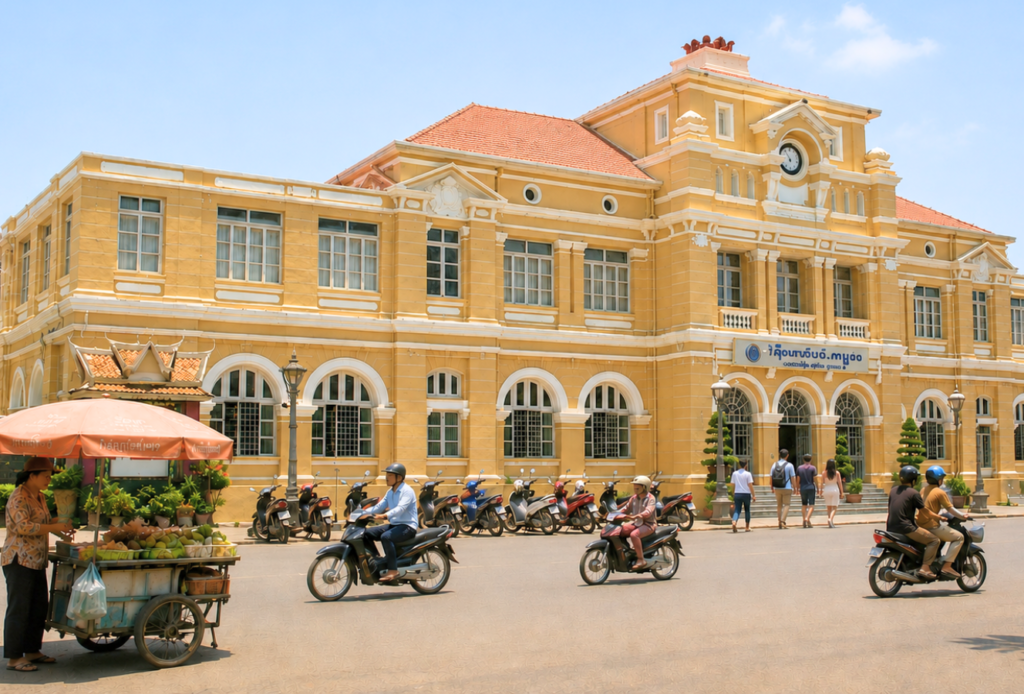
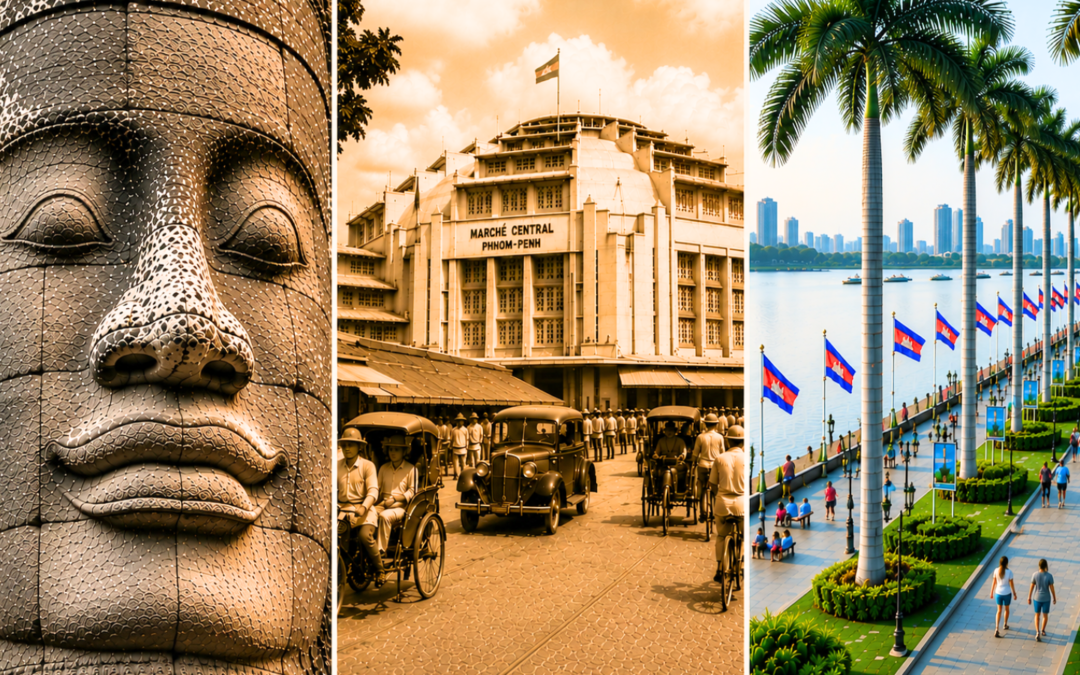
If you do end up teaching English in Cambodia, make sure you find the time to visit Phnom Penh’s Central Market and the Old Post Office. You would be hard-pressed to find better examples of French colonial architecture anywhere in the region. The historic Raffles Hotel building is another French masterpiece well worth seeing.

Despite the French leaving more than seventy years ago, the name Cambodge remains common among French speakers. For many visitors, this is often their first introduction to the historical connection between Cambodge and modern-day Cambodia.

Cambodia Becomes an Independent Nation

After almost a century of French colonial rule, Cambodia regained its independence in 1953 under King Norodom Sihanouk. From this point onward, the name Cambodia became the most widely used English-language reference to the country, while Kampuchea remained the Khmer-language equivalent.

Independence ushered in a period of nation-building and optimism. However, Cambodia’s location in the heart of Southeast Asia meant it could not completely escape the geopolitical tensions that were sweeping through the region during the Cold War. Events unfolding in neighbouring Vietnam and Laos would soon have a profound impact on Cambodia’s future.


Sihanouk


The Khmer Republic: A Tumultuous Chapter

Between 1970 and 1975, following a coup led by General Lon Nol, the Kingdom of Cambodia was transformed into the Khmer Republic. This occurred during one of the most politically volatile periods of the twentieth century. The Cold War was reshaping international politics, while conflict raged in neighbouring Vietnam and Laos. Around the world, governments increasingly aligned themselves with one of the competing superpowers.

The Lon Nol Government adopted a strongly anti-communist position and began receiving substantial military and economic support from the United States. Many Cambodians, particularly those living in regional and rural areas, did not share the political views of General Lon Nol and his government. Unsurprisingly, civil war followed.

The Khmer Republic lasted only five years. In April 1975, the communist Khmer Rouge movement, led by Pol Pot, entered Phnom Penh and overthrew the Lon Nol Government. What followed was not only a tragedy in Cambodian history but one of the darkest chapters in modern human history.

The Khmer Rouge Period and Cambodia’s Recovery

After seizing power in 1975, the Khmer Rouge attempted to radically transform Cambodian society. The consequences were catastrophic. It is estimated that more than two million Cambodian people died during the Khmer Rouge period through starvation, disease, forced labour, torture and execution. Families were separated, entire communities were dismantled and countless lives were destroyed.

The Khmer Rouge regime was eventually overthrown by Vietnamese forces in 1979. The years that followed were difficult as Cambodia sought to rebuild its institutions, infrastructure and economy. Gradually, stability returned. The Kingdom of Cambodia was restored and, despite inevitable challenges, the country has enjoyed relative political stability for more than four decades.

With a younger generation now playing an increasingly prominent role in public life, many Cambodians look towards the future with a sense of optimism.

Cambodia Today: Old and New Side by Side

How would I describe the Cambodia that I know today after more than a decade living here? It is a country where the old sits comfortably alongside the new.

Phnom Penh has evolved into a hub of economic activity and cultural revival. Modern apartment towers, office buildings and shopping centres stand alongside traditional markets, Buddhist temples and colonial-era landmarks. The contrast somehow works.


cambodge cambodia


Siem Reap, home to the world-famous Angkor Wat temple complex, successfully blends a substantial tourism industry with people simply going about their everyday lives. It remains one of Southeast Asia’s most fascinating destinations.

Sihanoukville presents a very different story. Over the past two decades, it has transformed from a relaxed coastal town into a city dominated by large-scale development and casinos. Some see this as progress. Others are less convinced. As the old saying goes, each to their own.

Beyond the major cities, rural Cambodia has also undergone significant change. New roads, bridges, schools and healthcare facilities have improved living standards across many parts of the country. Opportunities that were once unavailable to many Cambodians are becoming increasingly accessible.

Despite this rapid development, Cambodia remains deeply connected to its cultural heritage. Ancient traditions, Buddhist practices and family values continue to play an important role in daily life. The way local people embrace modernisation while preserving their cultural identity is genuinely impressive.

Today, Cambodia is a vibrant and diverse country with a growing economy and a cultural heritage that reflects the resilience of its people.

Conclusion

The terms Cambodge, Cambodia, the Khmer Empire and the Khmer Republic are all connected to the same broad geographical region, but they represent very different periods in the country’s history.

The Khmer Empire laid the cultural and historical foundations of modern Cambodia. The French colonial era introduced the name Cambodge, which remains in use among French speakers today. The Khmer Republic marked a brief but turbulent chapter during the Cold War, while modern Cambodia has emerged as a rapidly developing nation that remains deeply connected to its Khmer heritage.

Understanding these historical distinctions helps explain why different names continue to appear in discussions about Cambodia and provides valuable context for anyone considering travelling, living or teaching English in this fascinating country.


About the writer: Rob Winton completed the Australian Government-regulated TESOL program at AVSE in Ho Chi Minh City, Vietnam, fourteen years ago. For the past decade, Rob has worked as an ESL teacher in Phnom Penh while pursuing his passion for local history, with a particular interest in Cambodia’s Khmer Empire, French colonial, Khmer Republic and Khmer Rouge periods.

Does Teaching English to Cambodian Students Pay Well?

Does Teaching English to Cambodian Students Pay Well?

For aspiring expatriates (expats) who dream of immersing themselves in new cultures while earning a decent living, teaching English overseas has long been a favoured way to turn that ambition into reality. In recent years, Cambodia has emerged as a destination of choice for expats seeking an English teaching adventure in Southeast Asia. Why? From my first-hand experience, Cambodia’s popularity as an ESL teaching destination is driven by an insatiable demand for English language skills among the local population, genuine employment opportunities for those who can teach the language, low living costs, the warmth of the Cambodian people and an enticing expat lifestyle. Succinctly, teaching English to Cambodian students delivers a practical pathway to earn, explore, contribute and experience life in one of Southeast Asia’s most fascinating countries.


How Much Do Expat Teachers Get Paid?

Expat English as a Second Language (ESL) teachers in Cambodia typically work around 25 classroom hours a week — primarily Monday to Friday during daytime hours — and earn between US $800.00 and US $1,200.00 per month. I know of instances where teachers have secured salaries above US $1,200.00 monthly, but salaries within the range outlined above are more common.


Here are two things you can do to improve your chances of securing a salary closer to the higher end of the typical range.


First: Ensure your documentation is in order — a government-regulated TESOL qualification like the one offered by AVSE-TESOL in Phnom Penh, a criminal record check from your home country that is no more than six months old, and a sharp one-page CV that includes a professional-looking head-and-shoulders photograph. While many schools in Cambodia prefer expat teachers who hold a degree, a degree is not a mandatory requirement for securing a teaching-related work permit and related visa in Cambodia.


Second: Be respectful and prepare thoroughly before the interview. Listen carefully, answer questions politely and present yourself professionally. Remember that you are a visitor in Cambodia, and schools will expect you to show cultural awareness, humility and respect for local ways of doing things. The interview process is not the time to impose Western expectations or arrive with an inflated sense of entitlement. A positive attitude, modesty and genuine enthusiasm for working with Cambodian students can leave a strong impression.


teaching in Cambodia


Low Cost of Living for Foreign Teachers in Cambodia

To reach an informed view on whether teaching English to Cambodian students pays well from a foreign teacher’s perspective, local cost-of-living factors need to be considered. It’s fair to say that, on almost any measure, the cost of living in Cambodia is a fraction of what many Westerners experience in their home countries. While you may not earn as much as you could in your home country, Cambodia’s staggeringly low cost of living can still make working as a foreign teacher financially attractive.


In many Western countries, housing costs are exorbitant. In Cambodia, however, accommodation is comparatively inexpensive. For example, in Phnom Penh and Siem Reap — where many teaching jobs are located — you can generally find a furnished and comfortable apartment in a desirable area for approximately US $250.00 to US $350.00 per month.


You’ll also be pleased to know that food and drink in Cambodia are inexpensive by Western standards. With a daily food budget of around US $10.00 to US $12.00, you can eat very well and still enjoy the occasional beer or wine. If you’re comfortable eating Khmer street food, it can actually be cheaper to eat out in Cambodia than to cook at home.


Transportation is another major cost factor, and ESL teachers in Cambodia generally pay a fraction of what they might spend running a car or using public transport in their home country. Tuk-tuks are the preferred public transport option in Cambodia and, at roughly US $1.00 per kilometre, they’re relatively affordable. Those planning to teach English to Cambodian students for an extended period — say six to twelve months or longer — may prefer to rent a motorbike for approximately US $60.00 a month and enjoy the freedom that comes with it.


Lifestyle Benefits – Teaching English to Cambodian Students

The favourable salary-to-cost-of-living ratio enjoyed by foreign English teachers in Cambodia would mean far less without the appealing lifestyle that comes with the experience.

Many foreign teachers in Cambodia work less and save more than they would in their home country. When you add the relaxed pace of life, the generous hospitality of the local population and the country’s cultural richness, it’s easy to see why Cambodia has become such a popular destination for both aspiring and seasoned ESL educators.

does teaching english to cambodian students pay well


Outside the classroom, Cambodia offers something for everyone. If you enjoy café culture, Phnom Penh and Siem Reap are filled with trendy coffee shops, riverside restaurants, rooftop bars and lively markets that attract both expats and local people. History buffs can immerse themselves in everything from the awe-inspiring temples of Angkor Wat to the more recent and confronting history linked to foreign occupation, civil conflict and the Khmer Rouge era.

The arts and cultural scene in Cambodia is vibrant. Traditional dance, museums, art galleries, live music venues and cultural festivals are common features of life in towns and cities across the country. Buddhism also plays a visible role in everyday life, contributing to Cambodia’s distinctive atmosphere through stunning pagodas, spiritual traditions and classic Khmer architecture. If fitness is your thing, you’ll be spoilt for choice with cheap, welcoming gyms, riverside boardwalks and open spaces.

Importantly, Cambodia is relatively easy to navigate, making weekend travel and exploration both affordable and accessible for foreign teachers. Being centrally located in Southeast Asia also means travel to neighbouring countries — Vietnam, Thailand, Laos and beyond — is cheap and quick. 


Get your TESOL Certificate at AVSE-TESOL

Allow me the opportunity for a shameless plug.

Earlier in this article, I mentioned that government-regulated TESOL, TEFL or CELTA certification is the core qualification you’ll need to work as a paid English teacher in Cambodia. Whether you’re a foreigner or a Cambodian citizen, you can obtain TESOL certification through AVSE-TESOL in Phnom Penh. Delivered in-class or online, TESOL certification from AVSE-TESOL is accredited by the Australian Government and genuinely internationally recognised.


Conclusion

Foreign ESL teachers in Cambodia typically earn between US $800.00 and US $1,200.00 a month, markedly less than teachers in Western countries, but high by local standards.  When a high salary by local standards is combined with Cambodia’s low cost of living and attractive lifestyle, it’s easy to see why the country has gained traction as a premier ESL teaching destination.


With Australian Government-regulated TESOL certification from AVSE-TESOL, you could be teaching English to Cambodian students in Phnom Penh, Siem Reap, Battambang or elsewhere in the country sooner than you think.


About the writer: Bridgette Mackay is from Wellington, New Zealand. She has taught English in Phnom Penh since July 2022. Bridgette completed the Australian Government accredited TESOL course at AVSE in Ho Chi Minh City, Vietnam, but chose Cambodia as her teaching destination. Why? According to Bridgette, it’s all about the local people.     


Cambodian Language – What to Know Before You Go

Cambodian Language – What to Know Before You Go

Upon arrival in Cambodia, foreign English as a Second Language (ESL) teachers have many things to consider and organise: finding a place to live, opening a bank account, making friends, settling into a new job, where to get a great coffee, and a lot more. Navigating ‘language barriers’ on arrival (and after that) can be challenging in Cambodia, which has its own alphabet. Learning some essential words and phrases in the Cambodian language (also known as Khmer) will ease your transition into the Khmer culture and give you some brownie points with the locals. From my personal experience, local people love to see foreigners having a go with the Cambodian language. It’s an engaging talking point in its own right.


In this article, I’ll touch on how to read and say 104 words and phrases in Cambodian. Despite its shortcomings, ‘Google Translate’ is a good place to practice pronouncing Khmer words (for free). You can log in to ‘Google Translate’ via the following link: https://translate.google.com.au/?sl=auto&tl=km&op=translate


1: Basic Greetings and Manners

These everyday phrases in the Cambodian language are essential for greeting and interacting with people politely:


  1. Hello – សួស្តី (suosdei)
  2. Goodbye – លាហើយ (leahaey)
  3. Thank you – អរគុណ (awkun)
  4. Yes – បាទ/ចាស (bat/cha)
  5. No – ទេ (te)
  6. Please – សូម (som)
  7. Sorry – សុំទោស (somtoh)


cambodian language


2: Common Statements and Questions

Knowing a few basic statements and questions in the Cambodian language will help you engage with local people. Check out the following:


  1. How are you? – អ្នកសុខសប្បាយទេ? (neak sok sabay te?)
  2. What is your name? – អ្នកឈ្មោះអ្វី? (neak chmuah avei?)
  3. My name is… – ខ្ញុំឈ្មោះ… (khnhom chmuah…)
  4. Do you speak English? – អ្នកនិយាយភាសាអង់គ្លេសបានទេ? (neak niyeay pheasa angkles ban te?)
  5. I don’t understand – ខ្ញុំមិនយល់ទេ (khnhom min yul te)
  6. Where is…? – ឯណា…? (ae na…?)


3: Numbers

If you learn how to count to ten in the Cambodian language, with practice, you’ll know how to count to one million and beyond quicker than you think. How is that so? The numbers basically repeat themselves. For example, one in Khmer is ‘muoy’, eleven in Khmer is ‘dbmuoy’, two in Khmer is ‘pir’, twelve in Khmer is ‘dbpir’, three in Khmer is ‘bei’, thirteen in Khmer is ‘db bei’. Knowing basic numbers in the Cambodian language will make your life so much easier in everyday situations, including buying a product or service, asking and answering questions about age, discussing distance, weights, measures, and more.  


  1. One – មួយ (muoy)
  2. Two – ពីរ (pii)
  3. Three – បី (bei)
  4. Four – បួន (buon)
  5. Five – ប្រាំ (pram)
  6. Six – ប្រាំមួយ (pram muoy)
  7. Seven – ប្រាំពីរ (pram pi)
  8. Eight – ប្រាំបី (pram bei)
  9. Nine – ប្រាំបួន (pram buon)
  10. Ten – ដប់ (dop)


words in the cambodian language


4: Days of the Week

When you understand how to read and express the days of the week in the Cambodian language, you will be able to plan and organise your schedule with relative ease:


  1. Monday – ថ្ងៃច័ន្ទ (thngay chan)
  2. Tuesday – ថ្ងៃអង្គារ (thngay angkea)
  3. Wednesday – ថ្ងៃពុធ (thngay put)
  4. Thursday – ថ្ងៃព្រហស្បតិ៍ (thngay prohas)
  5. Friday – ថ្ងៃសុក្រ (thngay sok)
  6. Saturday – ថ្ងៃសៅរ៍ (thngay sao)
  7. Sunday – ថ្ងៃអាទិត្យ (thngay atit)


5: Food and Dining

Dining out in Cambodia is very affordable. This means you will most likely be eating out at least once a day – here are some useful words and phrases in the Cambodian language to assist you:


  1. Food – ម្ហូប (mhoop)
  2. Water – ទឹក (teuk)
  3. Rice – ស្រូវ (srov)
  4. Chicken – សាច់មាន់ (sach moan)
  5. Fish – ត្រី (trey)
  6. Vegetables – បន្លែ (banlae)
  7. Fruit – ផ្លែឈើ (phlae chheu)
  8. Coffee – កាហ្វេ (ka-fe)
  9. Tea – តែ (te)
  10. Beer – ស្រាបៀរ (sra-bia)


khmer language


6: Travel and Directions

Getting around in Cambodia is relatively cheap and easy for expats – make it even easier with these useful words in Khmer:


  1. Taxi – តាក់ស៊ី (tak-si)
  2. Bus – ឡានក្រុង (lan krong)
  3. Train – រទេះភ្លើង (roteh phlerng)
  4. Airport – អាកាសយានដ្ឋាន (akasayandthan)
  5. Hotel – សណ្ឋាគារ (sonthakia)
  6. Restaurant – ភោជនីយដ្ឋាន (phochaniyatharn)
  7. Left – ឆ្វេង (chhveng)
  8. Right – ស្ដាំ (sdam)
  9. Straight – ទៅមុខ (tov mok)
  10. Near – ជិត (chet)


7: Money Matters

Whether you’re shopping at the mall or the local marketplace, the following words in the Cambodian language will be very handy:


  1. How much? – តើមានតម្លៃប៉ុន្មាន? (tae mean damlay ponman?)
  2. Expensive – ថ្លៃ (thlay)
  3. Cheap – ថោក (thaok)
  4. Money – លុយ (luy)
  5. Market – ផ្សារ (psa)
  6. Shop – ហាង (hang)
  7. Buy – ទិញ (teinh)
  8. Sell – លក់ (luak)
  9. Discount – បញ្ចុះតម្លៃ (banchoh damlay)


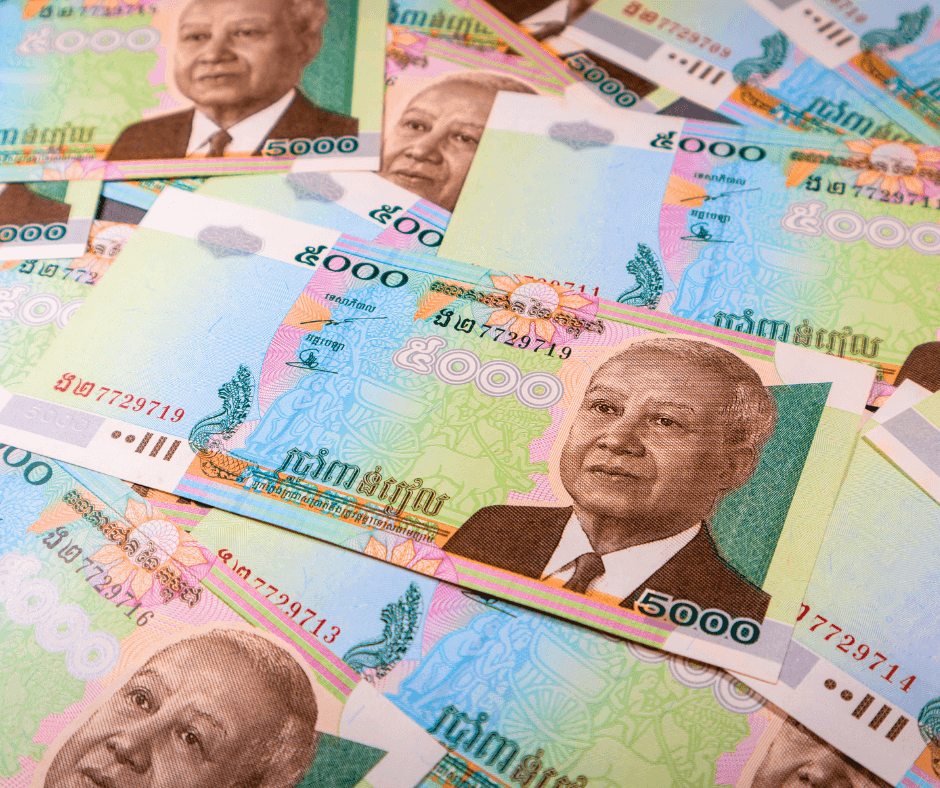
cambodian money


8: Emergencies

Here are some words in Khmer for handling emergencies, that hopefully you’ll never have to use:


  1. Doctor – វេជ្ជបណ្ឌិត (vechabondet)
  2. Hospital – មន្ទីរពេទ្យ (montipet)
  3. Pharmacy – ហ្វាម៉ាស៊ី (phama-si)
  4. Help! – ជួយផង! (chuoy pong!)
  5. Danger – គ្រោះថ្នាក់ (kruoh thnak)
  6. Fire – ភ្លើង (phlerng)
  7. Police – ប៉ូលីស (polis)
  8. Ambulance – ឡានសង្គ្រោះបន្ទាន់ (lan songkruah bontan)


9: Everyday Activities and Hobbies

Everyone loves ‘small talk’. It’s a great way to get to know people. Here are some valuable words in the Cambodian language to get a bit of ‘small talk’ happening with a local person:


  1. Eat – ញុំា (nham)
  2. Drink – ផឹក (phoek)
  3. Sleep – គេង (keng)
  4. Read – អាន (an)
  5. Write – សរសេរ (sorsae)
  6. Work – ធ្វើការ (thveu ka)
  7. Play – លេង (leng)
  8. Walk – ដើរ (daer)
  9. Run – រត់ (rot)


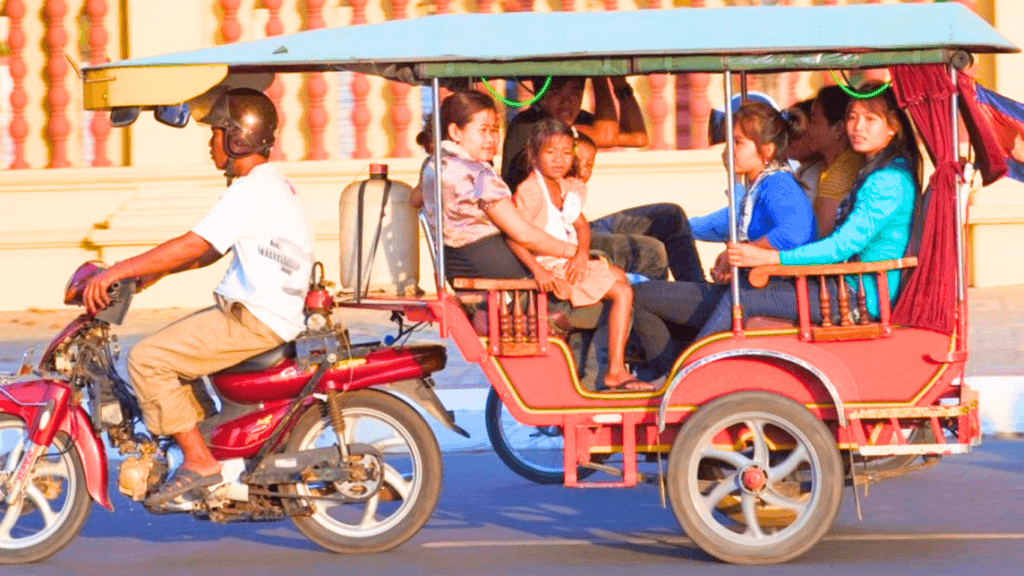
cambodia tuk tuk


10: Household Objects

Here are some words in the Cambodian language for household objects that you’ll find useful:


  1. House – ផ្ទះ (phtes)
  2. Car – ឡាន (lan)
  3. Bicycle – កង់ (kong)
  4. Phone – ទូរស័ព្ទ (toursap)
  5. Computer – កុំព្យូទ័រ (kompiutear)
  6. Book – សៀវភៅ (sievphov)
  7. Table – តុ (toh)
  8. Chair – កៅអី (kaoei)
  9. Window – បង្អួច (bang-uoch)
  10. Door – ទ្វារ (tvear)


11: The Natural World

Expats who love the great outdoors will undoubtedly thrive in Cambodia. Here are some useful phrases in Khmer to help you talk about your adventures:


  1. Sun – ព្រះអាទិត្យ (preah atit)
  2. Moon – ព្រះច័ន្ទ (preah chan)
  3. Star – ផ្កាយ (phkay)
  4. Rain – ភ្លៀង (phleung)
  5. Tree – ដើមឈើ (daem chheu)
  6. Flower – ផ្កា (phka)
  7. River – ទន្លេ (tonle)
  8. Mountain – ភ្នំ (phnom)
  9. Sea – សមុទ្រ (samot)
  10. Island – កោះ (koh)


12: Relationships and Emotions

Here are some words in the Cambodian language that will help you engage with locals who are nearest and dearest:  


  1. Friend – មិត្ត (met)
  2. Family – គ្រួសារ (krousa)
  3. Love – ស្រឡាញ់ (sralanh)
  4. Happy – សប្បាយ (sabay)
  5. Boyfriend – មិត្តប្រុស (mitt bros)
  6. Girlfriend – មិត្តស្រី (mitt srei)
  7. Husband – ប្តី (btei)
  8. Wife – ប្រពន្ធ (brapon)


khmer language


When Not to Use the Cambodian Language

Suppose you’ve signed up for the Australian Government-accredited TESOL programme at AVSE-TESOL in Phnom Penh, Cambodia. Great choice! Shortly after your course concludes, you’ll be in a top job teaching English in Cambodia based on your English language knowledge and skills – and your valid ESL teaching credentials. In an ESL classroom, your role is to teach English to Cambodian students. The classroom is not a place for an ESL teacher to practice his (or her) Cambodian language skills. Why? There are two key reasons:


  • The academic research is emphatic. ESL students best learn English in an English-speaking environment. Incorporating the local language into an ESL classroom is counterproductive and inhibits progress.
  • It’s important to remember why you are in the classroom. In addition, it’s important to remember why fee-paying customers come to your class. Are you there to practice your Khmer skills? Of course not. Are your students there to help you build Cambodian language skills? No, they aren’t. It’s all about teaching and learning English – in English.


Conclusion

As an ESL teacher in Cambodia, learning a few words and everyday phrases in the local language will help you enormously as you do everyday tasks. Like everything in life, there’s a time and a place. When you’re out and about, take every opportunity to use and build your Khmer skills. Conversely, an ESL classroom is not the place to practice your Khmer.


You will undoubtedly mispronounce and misuse words in the Cambodian language, just as your ESL students make mistakes. When this occurs, you will quickly see that it doesn’t matter. Cambodian folks will be ‘over the moon’ that you’re having a go with their language in their country. Your efforts will command a lot of respect.


About the writer: Mark Rockham did the Australian Government accredited TESOL course in Phnom Penh at AVSE in 2017. He has been teaching English in Cambodia for the past 7 years, including an online teaching position throughout the pandemic.  

Massive demand for foreign & Cambodian English Teachers

Massive demand for foreign & Cambodian English Teachers

Cambodia is a land of natural beauty, awe-inspiring temples, and a vibrant culture. Local people are understandably proud of their country, and nowadays, tourists and expats alike love the place—it hasn’t always been like that. The expat community in Cambodia is flourishing, in part because one of the fastest-growing industries in the country is English as a Second Language (ESL) teaching and learning. The demand for both foreign and Cambodian English teachers is huge.


Why has the demand for foreign and Cambodian English teachers gone through the roof? It’s largely due to Cambodia’s rapidly developing economy, the drive towards self-sufficiency, and opening the doors to the outside world after years of unrest and hardship. Most importantly, Cambodian citizens acknowledge English proficiency as a valuable skill that provides a pathway to a better future. Country-wide, Cambodian citizens have bought into the idea that English, the ‘international language’, is paramount.


For a foreigner, teaching in Cambodia is the perfect way to establish a life for themselves in this dynamic country. From a local perspective, Cambodian English teachers are held in high esteem by compatriots and enjoy work conditions that are typically better than what’s available in the country’s mainstay industries.


cambodian english


In this article, we’ll go into a little more detail about Cambodia’s rapid development and how this has resulted in a callout for both foreign and Cambodian English teachers. Later, we will explain the benefits of acquiring a reputable, internationally recognized TESOL certificate, a core qualification for working as an English teacher, and how this will set you up for success in your career in Cambodia and beyond.


Economic growth

Cambodia’s economy continues to grow at an astounding rate. Here’s why this is occurring.


Direct investment by the Cambodian Government over the past ten to fifteen years has seen an improvement in road networks, close to a total rebuild of the Phnom Penh International Airport, and a raft of other eye-catching infrastructure projects. Moreover, foreign direct investment from countries like China, South Korea, Japan, and Australia has modernized Cambodia’s industrial sector.


Cambodia’s strategic location in Southeast Asia makes the country an ideal regional trade hub. By continuing to improve its infrastructure and invigorate economic policies, Cambodia is well-positioned for ongoing growth in the coming years. The need for English proficiency across countless sectors of the Cambodian economy is a direct byproduct of economic development. For example, in 2023, over 5 million tourists from countries near and far visited Cambodia, significantly boosting the country’s GDP and creating lucrative job opportunities. As international tourists continue to make a beeline for the best of what Cambodia has to offer—Angkor Wat, stunning pagodas, architectural marvels from the French colonial era, and much more—the demand for English proficiency in the tourism sector will only increase, feeding the demand for foreign and Cambodian English teachers.


cambodian english teachers


Rising demand for English teaching in Cambodia

As previously mentioned, the demand for English teaching and learning in Cambodia is substantial—so much so that the Cambodian government has publicly acknowledged its importance for fostering economic independence. Policies have recently been implemented to integrate English education into the national curriculum to equip emerging generations with English proficiency.


This means that English teaching in Cambodia is an attractive proposition for suitably qualified foreigners – and local people – a career path with tangible benefits all around. Foreign English teachers who decide to live and work in Cambodia experience a high quality of life, reaping the benefits of a low cost of living, a vibrant culture, and the opportunity to make a resounding impact on the lives of the students they work with. By training and providing employment opportunities for Cambodian English teachers, the country enriches its educational landscape and moves closer to self-sufficiency. 


Get your TESOL certificate at AVSE-TESOL

To embark on your career as an English teacher in Cambodia, some important prerequisites must be met.


cambodian english


While schools expect a foreign English teacher to hold a bachelor’s degree, it’s not a core requirement for a ‘Work Permit’. Schools also expect foreign English teachers to hold internationally accredited TESOL (Teaching English to Speakers of Other Languages) certification. TESOL certification shows prospective employers that you are well-equipped with the skill set required to teach English to non-native English speakers. The core requirement for a local person to work as a Cambodian English teacher is a university degree in education or a degree in another discipline supported by internationally recognized TESOL certification at the level provided by AVSE TESOL in Phnom Penh. 


Whether you’re a foreigner or a Cambodian citizen, you can obtain TESOL certification from AVSE TESOL (Vietnam and Cambodia). TESOL certification from AVSE TESOL (delivered in both in-person and online modes) is accredited by the Australian Government and recognized internationally. Among other things, during the comprehensive training at AVSE TESOL, you’ll learn about essential teaching methodologies, classroom management, and cultural awareness required to teach English to non-native English speakers. Importantly, the TESOL program at AVSE TESOL also comes with hands-on employment support.


Conclusion

As the Cambodia economy continues to develop at a rapid rate, the demand for both foreign English teachers and Cambodian English teachers is guaranteed to rise. If you are aspiring to teach English in Cambodia, an internationally accredited TESOL certificate from AVSE TESOL will ensure that you are well-equipped with the knowledge and technical skills you need to succeed in your career.


About the author: Originally from the United States, Bill Brampton worked as a foreign English teacher in Phnom Penh from August 2022 to June 2024. During his 20 months living and working in Phnom Penh, Bill witnessed first-hand how economic development and related factors are behind the push for a much higher level of English proficiency in Cambodia – and consequently, great teaching jobs for foreign and Cambodian English teachers.